

- What Exactly is the Envelope Budgeting Method?
- My Pre-Envelope Life: The Digital Abyss
- Phase 1: Setting Up the System (The Hard Part)
- Step 1: The Financial Audit
- Step 2: The Great Cash Withdrawal
- Step 3: Labeling and Stuffing
- Phase 2: Living with the Envelopes (The Transformation)
- The Grocery Store Revelation
- The Entertainment Envelope: A Hard Stop
- Phase 3: The Results After 90 Days
- 1. Debt Reduction Accelerated
- 2. Reduced Financial Anxiety
- 3. A Clearer Picture of True Spending
- The Flexibility Factor
- Tips for Making the Envelope Method Work for You
- Conclusion: The Power of Physical Limits
I Tried the Envelope Method and It Actually Worked: My Journey to Financial Clarity
We’ve all been there. You get paid, you feel momentarily rich, and then, almost magically, the money vanishes. Bills are paid, necessities are covered, but that elusive feeling of financial control remains just out of reach. For years, I cycled through budgeting apps, complex spreadsheets, and hopeful New Year’s resolutions, only to find myself staring blankly at my bank balance mid-month, wondering where every last dollar went.
Then, I stumbled upon a budgeting technique that sounded almost comically simple: The Envelope Method. Skeptical but desperate, I decided to give this analog approach a full 90-day trial. What followed wasn’t just a successful budget; it was a complete overhaul of my relationship with money.
This is the story of how ditching the digital and embracing physical cash transformed my chaotic spending habits into a system that actually works.
What Exactly is the Envelope Budgeting Method?
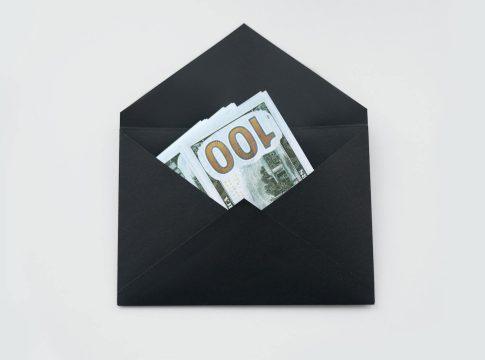
The Envelope Method, also known as cash stuffing or zero-based budgeting with physical cash, is a time-tested system that forces you to confront your spending limits in a tangible way. Unlike digital apps where you can easily swipe a card and pretend the money is still there, this method relies on the simple, undeniable truth of physical currency.
The core principle is straightforward:
- Determine your monthly income.
- Allocate every dollar to a specific category (groceries, gas, entertainment, etc.)—this is the “zero-based” aspect.
- Withdraw the budgeted cash for variable expenses.
- Stuff the cash into labeled envelopes.
- When the cash in an envelope is gone, the spending stops for that category until the next funding cycle.
It’s a powerful system because it introduces friction. Pulling out a $20 bill feels much more significant than tapping a plastic card.
My Pre-Envelope Life: The Digital Abyss
Before diving into the world of manila envelopes, my financial life was characterized by “budget drift.”
I used popular budgeting apps religiously. I categorized every transaction, set limits, and felt virtuous. However, the apps had a critical flaw for my personality: they were too forgiving.
- The “Just This Once” Syndrome: If I overspent on dining out by $50, the app would simply show a negative balance in that category. I’d think, “Oh, I’ll just cover it from savings later,” or worse, I’d just ignore the warning and keep spending, knowing the digital ledger wouldn’t physically stop me.
- The Subscription Creep: Digital tracking made it easy to forget small, recurring charges that chipped away at my funds.
- The Impulse Buy Trap: Shopping online felt like playing a video game where money was infinite points.
I needed a system that provided immediate, undeniable feedback. I needed something that hurt a little when I spent it.
Phase 1: Setting Up the System (The Hard Part)
The initial setup required intense focus, but it was surprisingly grounding.
Step 1: The Financial Audit
I started by looking at my last three months of bank statements. I needed realistic numbers, not hopeful ones.
| Category | Average Monthly Spend | Budgeted Amount | Notes |
|---|---|---|---|
| Rent/Mortgage | Fixed | Fixed (Paid electronically) | Not included in cash stuffing |
| Groceries | $650 | $600 | Aiming for a slight reduction |
| Gas/Fuel | $180 | $180 | Relatively stable |
| Dining Out | $450 | $200 | Major Cutback Area |
| Entertainment | $150 | $100 | Movies, streaming add-ons |
| Personal Care | $100 | $75 | Haircuts, toiletries |
| Miscellaneous/Fun | $200 | $150 | Coffee runs, impulse buys |
Step 2: The Great Cash Withdrawal
This was the moment of truth. After paying my fixed bills electronically, I walked into the bank and withdrew the total amount budgeted for my variable expenses: $1,305. Seeing that stack of cash felt simultaneously terrifying and exhilarating.
Step 3: Labeling and Stuffing
I purchased a set of brightly colored, sturdy envelopes. I labeled each one clearly: GROCERIES, DINING OUT, FUN, etc. Then, I meticulously stuffed the exact budgeted amount into each corresponding envelope.
The Dining Out envelope, which used to be a black hole for my money, now contained a very finite $200.
Phase 2: Living with the Envelopes (The Transformation)
The first week was awkward. I felt like a character in an old movie, fumbling for cash at the register. But quickly, the awkwardness transformed into awareness.
The Grocery Store Revelation
My first trip to the grocery store was eye-opening. I had $600 budgeted for the month, which meant roughly $150 per week. When I got to the checkout with a cart full of items, I pulled out the envelope. As the cashier rang up the total, I mentally subtracted it from the cash in my hand.
If the total was $165, I had to make an immediate decision: Do I pull $15 from the next week’s grocery allotment (which I knew would make next week harder), or do I put back that extra bottle of fancy olive oil?
I put the olive oil back. In the digital world, I would have just paid the extra $15 and forgotten about it. With the envelope, the consequence was immediate and tangible.
The Entertainment Envelope: A Hard Stop
The most dramatic change occurred with the Dining Out and Entertainment envelopes.
By the 15th of the month, the Dining Out envelope was completely empty. In the past, I would have simply started using my credit card guilt-free. This time, however, I was physically unable to spend money that wasn’t there.
This forced me to get creative. Instead of meeting friends at restaurants, we started having potlucks (saving money on both sides). Instead of grabbing a $6 latte every morning, I brewed coffee at home and kept a small “Emergency Coffee Fund” envelope with $20 for the entire month—a massive reduction from my previous habit.
The physical barrier forced me to pause and ask: Is this expense worth depleting the remaining cash for the month? Usually, the answer was no.
Phase 3: The Results After 90 Days
After three full months of strict envelope budgeting, the results were undeniable.
1. Debt Reduction Accelerated
By cutting my discretionary spending (Dining Out, Entertainment, Miscellaneous) by nearly 40%, I freed up an extra $450 per month. This money was immediately redirected to my highest-interest credit card debt. The psychological win of seeing that debt principal shrink was far more motivating than any app notification.
2. Reduced Financial Anxiety
The biggest surprise was the mental clarity. Before, I constantly worried about overspending. Now, I knew exactly where I stood. If the Groceries envelope was half full, I knew I had half the money left for groceries. There was no guesswork, no checking confusing online balances that didn’t account for pending transactions.
3. A Clearer Picture of True Spending
The method exposed my “phantom spending”—those small, frequent purchases that add up. The $5 here and $10 there added up to hundreds. When you have to physically hand over a $10 bill for a single item, you become acutely aware of the price tag.
The Flexibility Factor
One common criticism of the envelope method is its rigidity. However, I found flexibility within the structure. If I had a legitimate, unexpected expense (like a flat tire), I could “borrow” from a less critical envelope, like Entertainment, but I had to make a note to pay it back next month. This borrowing was intentional, not accidental, which is the key difference.
Tips for Making the Envelope Method Work for You
If you’re considering trying this system, here are the essential takeaways from my experience:
- Don’t Stuff Fixed Expenses: Keep rent, utilities, insurance, and loan payments electronic. The envelope method is best suited for variable, discretionary spending where overspending is common.
- Use High-Quality Envelopes: Cheap paper envelopes tear easily. Invest in sturdy envelopes or small zippered pouches for categories that see heavy use (like groceries).
- Schedule Your Cash Runs: Don’t try to withdraw cash for the entire month at once if you’re nervous. Try weekly cash stuffing sessions to ease into the habit.
- The “Buffer” Envelope: Create a small “Buffer” or “Oops” envelope with $50-$100. This prevents you from having to raid a critical category (like Gas) for a minor mistake.
- Track the Leftovers: At the end of the month, count the cash remaining in each envelope. This surplus is your reward! Roll it over to savings, debt, or use it to “pad” next month’s budget.
Conclusion: The Power of Physical Limits
The Envelope Method isn’t revolutionary in its concept—it’s just budgeting 101. What makes it revolutionary is its delivery system. By forcing me to use physical cash for my most problematic spending areas, it created a behavioral circuit breaker.
I started the trial skeptical, expecting to revert to my old habits by week four. Instead, I found a system that was simple, effective, and, most importantly, impossible to ignore. If you are tired of digital budgeting that lets you cheat yourself, give the envelopes a try. You might just find that the physical barrier is exactly what you need to finally take control of your finances.